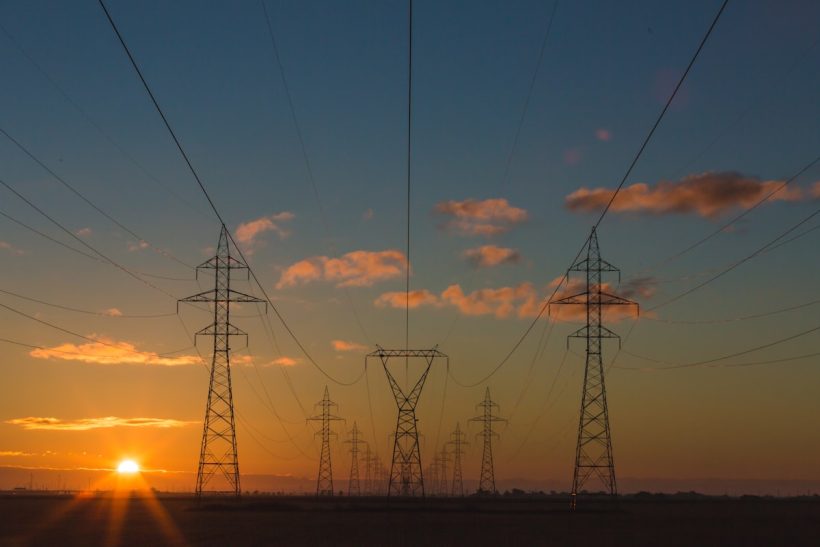

Africa’s solar sector just posted its fastest growth on record. New solar installations across the continent jumped 54% in 2025 — reaching 4.5 GW of new capacity — according to BloombergNEF and the International Energy Agency. The headline number is impressive. The gap behind it is the real story.
The World Bank’s Mission 300 initiative, launched in 2024, estimates that $46 billion in infrastructure investment is needed by 2030 to electrify 29 countries and extend reliable power to 300 million people across sub-Saharan Africa. At current deployment rates, Africa is on a trajectory to hit a fraction of that target. The urgency is matched by the opportunity: the continent has the fastest-growing off-grid energy market in the world.
The Mini-Grid Operators Leading the Push
Husk Power Systems closed a $103 million Series D in early 2026 — the largest mini-grid raise in Africa’s history — and is deploying it aggressively. The company is targeting 1,400 mini-grid installations across the continent, with its Nigeria programme scaling from 200 active sites to 1,500. Husk operates hybrid solar-plus-gas plants in rural markets that most utility providers have never served, delivering power at tariffs competitive with diesel generators.
Sun King, one of Africa’s largest solar home system distributors, raised $40 million in a growth round and is expanding its agent network from 30,000 to a target of 90,000 across 12 African markets by 2030. The company’s pay-as-you-go model — where customers pay for solar hardware in daily or weekly instalments via mobile money — has become the dominant distribution mechanism in East and West Africa for households outside mini-grid reach.
BBOXX and d.light continue to operate across the market, with BBOXX increasingly focused on productive-use appliances — water pumps, agri-processing equipment, cold storage — that generate enough economic return for customers to finance the solar installation. The productive-use thesis has strengthened considerably as component costs fall: a solar irrigation pump that pays for itself in a single planting season now represents a viable credit product for rural-focused lenders.
Sudan and Cabo Verde: Expanding Frontiers
Two markets are seeing meaningful activity in early 2026. Sudan — despite its ongoing political crisis — is seeing donor-funded mini-grid deployments in displacement-affected communities, driven by USAID and EU-funded resilience programmes. The logic is humanitarian: reliable power for clinics, water pumping, and communication infrastructure in IDP settlements. Cabo Verde, by contrast, is operating at the other end of the spectrum: a politically stable archipelago nation accelerating its push toward 100% renewable power, with mini-grid deployments on the outer islands reducing diesel import dependency.
The $46 Billion Funding Gap
Mission 300 represents a $46 billion capital mobilisation challenge over five years. Current annual investment in African off-grid energy sits at roughly $1.2 billion — a fraction of the run rate required. Three financing constraints are driving the gap: currency mismatch (most capital is denominated in USD or EUR while revenues are in local currencies), long payback periods (mini-grids typically break even over five to seven years), and perceived political risk in the highest-need markets.
The World Bank and African Development Bank are deploying blended finance structures — first-loss guarantees, concessional capital tranches — to crowd in private investment. Development Finance Institutions including the UK’s BII and the US DFC have made off-grid energy commitments. But the mobilisation gap remains wide, and progress toward the 2030 target is measured in countries electrified, not just watts installed.
For investors and operators, the scaling dynamic is clear: the technology is proven, the demand is real, and the policy environment in key markets — Kenya, Nigeria, Ethiopia, Tanzania — is increasingly favourable. The constraint is financing velocity. The companies that build the capital access mechanisms will be as important as the companies deploying the panels.
Sources: BloombergNEF Africa Energy Outlook 2026; World Bank Mission 300 Initiative; Husk Power Series D announcement; Sun King company filings; IEA Africa Energy Outlook 2025. BETAR.africa covers African business, technology, and innovation.

 UphivaBETAR
 Joseph Busari