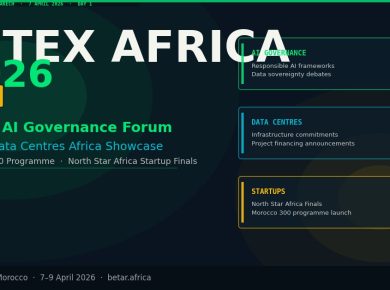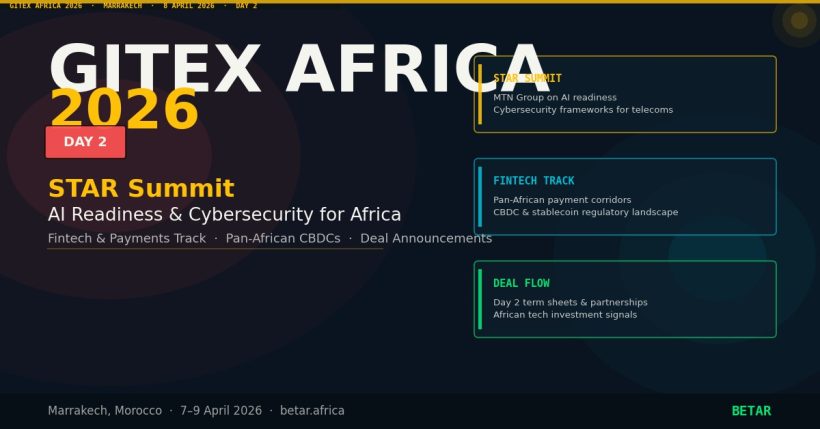

MARRAKECH — On Day 2 of GITEX Africa 2026, the event’s most anticipated new session — the Strategic Digital Defence AI Readiness Summit — took the main stage with a pointed argument: Africa’s digital infrastructure buildout and its cybersecurity posture are now on a collision course, and the continent does not have time to solve them sequentially.
The STAR Summit: Africa’s Cyber Deficit Laid Bare
The STAR Summit — Strategic Digital Defence AI Readiness — was conceived in partnership with Morocco’s General Directorate for Information Systems Security (DGSSI) and represents the first time GITEX Africa has given cybersecurity its own dedicated main-stage programme.
The framing was deliberate. Brigadier General Abdellah Boutrig, Director General of the DGSSI and one of the summit’s architects, set the stakes before the event opened: “Cyberattacks, industrialised threats, and online fraud are increasing. Institutions and businesses need stronger prevention and response capabilities.” As African governments accelerate national AI frameworks, data centre buildouts, and digital identity programmes — all showcased on Day 1 — they are simultaneously creating higher-value targets for threat actors, many operating with AI-augmented attack toolkits that outpace the defences of institutions still working through digital transformation basics.
Justin Williams, Group Chief Information Security Officer at MTN Group, took the stage as one of the summit’s anchor voices.
He was joined by senior cyber officials from across the continent and beyond: Divine Selase Agbeti, Director-General of Ghana’s Cyber Security Authority; David Kanamugire, CEO of Rwanda’s National Cyber Security Authority; Tigist Hamid Mohammed, Director-General of Ethiopia’s Information Network Security Administration (INSA); and Dr Mohamed Al Kuwaiti, UAE Government Cybersecurity Chief. On the private sector side, Amit Ghodekar, Global CISO at Aramex, brought the logistics and supply-chain security perspective.
On the exhibition floor, the cybersecurity concentration was visible: Fortinet, Check Point, Huawei, Kaspersky, and Trend Micro anchored the established vendor presence, while a cohort of Africa-focused security startups — Cypherleak, Smile Identity, Entersekt, and YouVerify — occupied dedicated startup showcase space. The vendor lineup signals that private sector appetite for the continent’s cybersecurity market is real, not aspirational. GITEX Africa 2026 is the first edition where cybersecurity has its own dedicated main-stage programme rather than a side track.
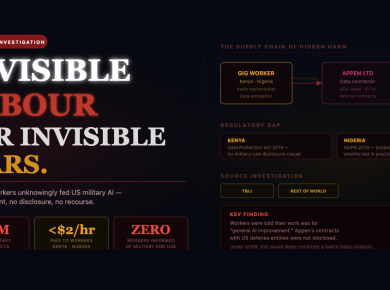
BETAR has previously documented the governance gap in African AI surveillance spending: $2 billion deployed across the continent with minimal regulatory oversight. The STAR Summit represented the first formal attempt to bring regulators and private sector security leaders into the same room at scale.
Fintech and the Future of Payments
If the STAR Summit was Day 2’s headline, the Fintech and Future of Finance track was its working session.
The panel “The Digitalisation of Money — Who Governs the Future of Payments?” brought together payment leaders and regulators to confront a question that African fintech has been circling for two years: as mobile money, stablecoins, and CBDCs all scale simultaneously, who sets the rules for how money moves?
The backdrop is significant. Africa’s fintech market is projected to more than double — from $30 billion in 2025 to $65 billion by 2030 — driven primarily by mobile money expansion, cross-border remittance corridors, and AI-driven credit underwriting. The panel’s agenda explicitly addressed the trust gap between technology developers and regulators, a tension the continent must resolve if digital financial infrastructure is to scale. Bank Al-Maghrib’s digital dirham (CBDC) was cited ahead of the event as a test case for how monetary sovereignty and digital payments interoperability can coexist.
BETAR has covered both sides of this equation extensively. The Kenya–Rwanda PSP licence passporting MoU and Kenya’s VASP stablecoin capital rule represent the regulatory architecture being assembled in East Africa. The GITEX payments track offered a window into how North and West Africa are approaching the same questions.
Deal Flow: What the Handshakes Signalled
Day 2 at GITEX Africa is historically when commercial commitments materialise. The investor track — 400+ fund managers overseeing $350 billion in assets — moved from match-making into term-sheet territory.
Key Day 2 Sessions
| Session / Track | Key Speakers |
|---|---|
| STAR Summit (Strategic Digital Defence AI Readiness) | Justin Williams (MTN Group CISO), Amit Ghodekar (Aramex CISO), Divine Selase Agbeti (Ghana CSA DG), David Kanamugire (Rwanda NCSA CEO), Tigist Hamid Mohammed (Ethiopia INSA DG), Dr Mohamed Al Kuwaiti (UAE Cybersecurity Chief) |
| Fintech and Future of Finance | |
| North Star Africa (competition results) |
BETAR.africa is reporting live from GITEX Africa 2026 in Marrakech. This article will be updated as Day 2 proceedings conclude.


 UphivaBETAR