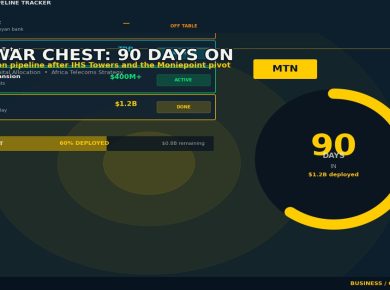
MTN’s $2.2B IHS Towers buyout was the biggest infrastructure play in African telecoms history. Now comes the harder question: does MoMo generate the fintech returns the strategy requires?
60% of African youth aged 15-24 are not in employment, education, or training. BETAR maps the structural drivers of the continent’s school-to-work gap.
Africa’s learning poverty crisis is partly a language problem. Teaching 200 million children to read in a language they don’t speak at home drives school failure, grade repetition, and dropout — and it’s a policy choice, not an inevitability.
Africa hosts 30+ international film festivals annually, but the commercial economics are rarely examined. BETAR maps FESPACO’s operating costs, filmmaker submission fees, co-production market deal flow, and whether the circuit generates real ROI for filmmakers.
Africa’s documentary sector has never been systematically mapped by economics. BETAR tracks commissioning fees, co-production fund grants, and the filmmaker income model from development to delivery.
African startups raised $532 million across 41 deals in Q1 2026 — but 59% was debt, not equity. BETAR’s quarterly tracker reveals what the numbers actually say about Africa’s venture economy.
Nigeria has 231 licensed ISPs but only 133 are active. The Legend-Spectranet merger creates the largest ISP on paper. In practice, it is a survival play against satellite disruption, forex pressure, and $2 billion in state-backed fibre infrastructure.
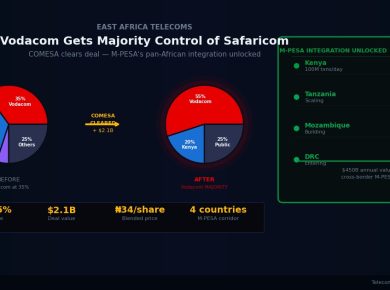
Africa’s cross-border payments market is fragmenting into competing corridors — Moniepoint, MTN MoMo, Wise, and EAC passporting all racing to own the pan-African payments layer.
Seven years and 35 million MAUs later, MTN has shut down Ayoba. The post-mortem is short: African telcos cannot build messaging apps. The interesting question is what they can build instead.

 UphivaBETAR