AfDB and UNDP announced a $10B AI initiative targeting 40M jobs by 2035. The ambition is real. The compute infrastructure to execute it does not yet exist.
Rwanda is running two digital currency tracks simultaneously: a comprehensive virtual assets law and an e-FRW retail CBDC pilot. BETAR explains why the dual-track approach is deliberate.
South Africa recorded more than 335 consecutive days without loadshedding in early 2026. The structural drivers behind the turnaround — and the structural risks that remain — matter for every investor pricing South Africa’s energy future.
The CBN’s March 12 directive mandates biometric liveness verification for all new account openings by July 1, 2026. The real target: synthetic identity fraud industrialising across Nigerian digital banking.
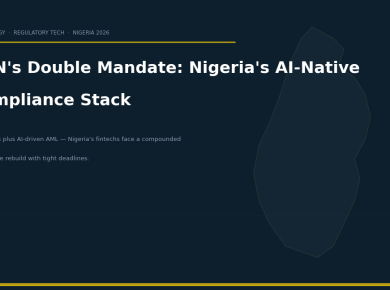
A CBN circular dated March 10, 2026 mandates AI-driven AML infrastructure for all Nigerian banks and fintechs — the first formal AI compliance mandate in Sub-Saharan Africa.
South Africa activated a 150% tax deduction on EV manufacturing investment — but none of its six major automakers are positioned to use it. The policy is aimed at manufacturers it’s trying to attract, not those it has.
The NCC-CBN Consumer Refund Framework mandates automatic refunds within 30 seconds for failed transactions. ₦10B was already refunded before the formal system launched.
Nigeria’s AI Bill classifies risks and mandates audits — but doesn’t mention elections. BETAR analysis shows the 2027 campaign has already started and the gap between legislation and AI-enabled electoral interference is dangerously wide.
The CBK and NBR signed a landmark mutual recognition agreement for payment service providers — the first concrete step toward integrating East Africa’s fragmented payments landscape.
Breadfast confirms IPO plans at a $400M valuation after a $50M Pre-Series C backed by Mubadala, IFC, and Y Combinator. What the exchange decision and Gulf capital strategy mean for Africa’s public markets.

 UphivaBETAR