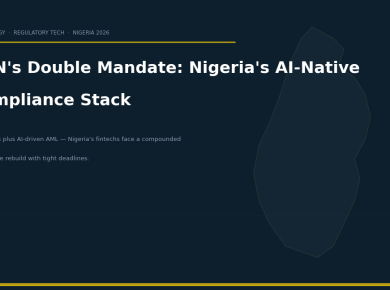
Nine months before Paystack acquired Ladder Microfinance Bank, the CBN fined it N250M for operating Zap outside its licence. Act one established the problem. Act two is the solution.
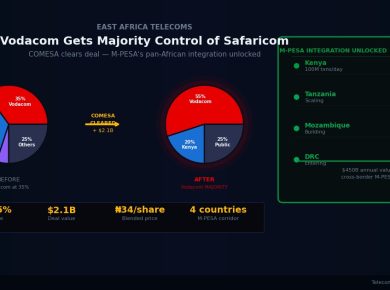
The COMESA Competition Commission’s March 16 submission deadline has passed. Africa’s most ambitious digital antitrust case enters its evidence-weighing phase — and Meta’s exposure is larger than most have priced in.
A $10B PE exit backlog, a dried-up Series A market, and DFI mandate deadlines are forcing Africa’s best-funded private companies toward public markets. BETAR tracks who is likely to list first.
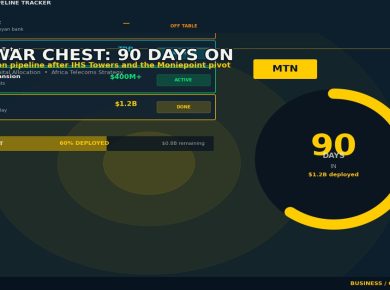
MTN’s $2.2B IHS Towers acquisition consumes 60% of its fintech war chest. BETAR analyses the balance sheet impact and what it means for MoMo’s product ambitions in 2026–2027.
Africa’s families spend an estimated $5.8B a year on private tutoring — a market that public school failure built and VC-backed EdTech ignored. BETAR maps the shadow education economy for the first time.
Africa has a $5B EV charging market opportunity and approximately 200 public chargers. BETAR examines why the gap persists and which players are positioning to close it.
Egypt is racing to 1GW of new solar capacity. BETAR examines how the continent’s largest renewable energy projects are being structured — DFIs, blended finance, and the commercial banks entering the mix.
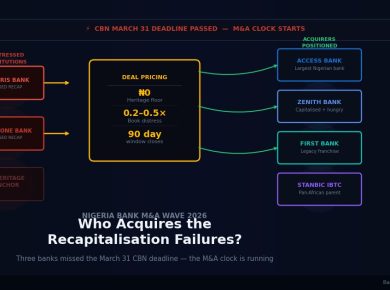
The CBN’s March 2026 bank recapitalisation deadline has passed. BETAR tracks who met the N500B capital floor, who merged, who is still running, and what the reshaped banking sector means for credit access.
WTO members at MC14 extended the e-commerce moratorium again. For Africa — caught between digital tax revenue needs and WTO compliance obligations — the delay buys time but does not resolve the fundamental contradiction.
Africa has added 300 new universities in two decades. The enrolment numbers are impressive. The graduate employment outcomes are not. BETAR examines the quality crisis behind the expansion.

 UphivaBETAR